Find where your story breaks before investors do.
A pitch deck can look polished and still be hard to defend. DeckNarrator reviews the logic, sequence, proof gaps, and likely questions behind your deck before the meeting.
Your deck may be clear to you. That does not mean it is defendable.
Founders often do not need another prettier slide. They need to know whether a serious person can question the story and still understand why this company, this market, this timing, and this next milestone deserve attention.
A big thesis can become a wall of possibilities. Investors need the first proof loop, not every possible future.
Programs, pilots, logos, traction, or technical progress only help if they form a clear evidence chain.
If the deck does not answer “why now?”, “why you?”, or “what risk remains?”, the room will ask.
The questions usually start here.
DeckNarrator looks for the pressure points that make a deck feel abstract, unsupported, or harder to believe than it needs to be.
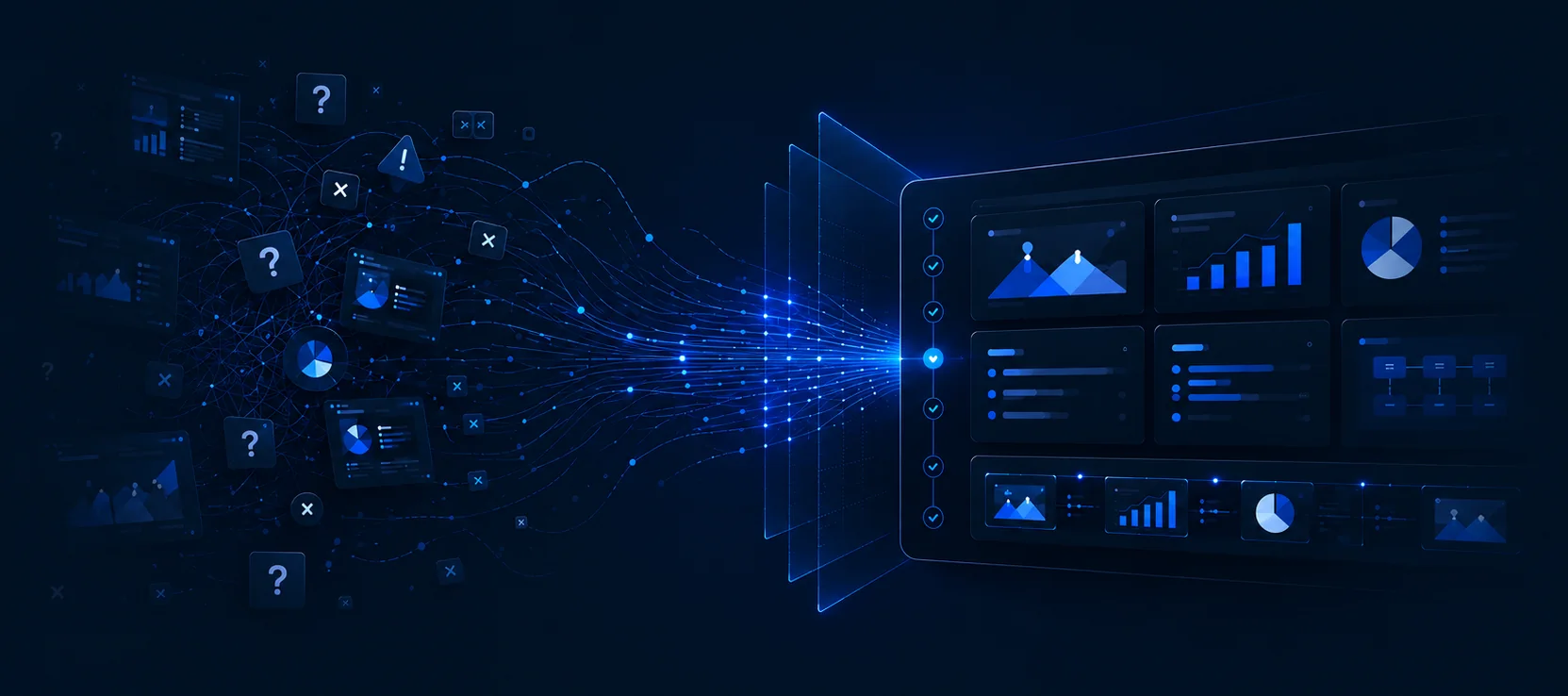
A strong fundraising story has an order.
The goal is not to make the company sound smaller. The goal is to make the first step concrete enough that the larger vision becomes believable.
What pain is urgent enough to matter?
Where does the first focused use case begin?
What evidence already reduces doubt?
What still needs to be validated?
Why does capital now make sense?
Not slide polish. Narrative defensibility.
DeckNarrator looks for
- unclear sequence
- unsupported claims
- missing “why now” logic
- weak proof points
- broad visions without a concrete wedge
- likely investor objections
DeckNarrator is not
- a redesign service
- a slide template marketplace
- a generic AI presentation maker
- a substitute for your strategy
- a promise that investors will say yes
- a cosmetic review of your layout
Use this when the next conversation matters.
This is strongest when you already have a deck, teaser, one-pager, or thesis and you are close to a real moment of pressure.
Pre-seed or seed fundraising
Check whether the deck explains what has been proven, what remains risk, and why this round makes sense now.
Technical or complex startups
Turn a large technical thesis into a focused story a non-specialist investor can follow.
Investor, client, or partner meetings
Find the parts of the story that may trigger confusion before the room does.
Receive a structured Review Room, not a cosmetic slide critique.
Your Review Room shows narrative risks, likely objections, proof gaps, and fix priorities so you know what to strengthen before presenting.
Common questions
Is this the same as pitch deck design?
No. This page is about narrative risk, logic, proof, and likely questions. It does not focus on visual redesign.
What if my deck already looks polished?
That is exactly when this is useful. A polished deck can still be unclear, unsupported, or hard to defend.
What does “narrative risk” mean?
It means the points where your audience may lose the story, question the logic, doubt the evidence, or fail to understand why the next step matters.
Who is this for?
Founders, operators, and teams preparing for investor, client, board, or leadership conversations where the story needs to hold up under pressure.
What file format do you accept?
PDF only.
Find where your story breaks before the meeting.
Upload your pitch deck and receive a private Review Room showing where the narrative becomes unclear, unsupported, or hard to defend.